You are now in a secure area

T 01932 847242
F 01932 821413
E info@oatlandsparkhotel.com

Oatlands Park Hotel
  • Home
  • About
    • Accommodation
    • The Grounds
    • History
    • Local Attractions
  • Food & Drink
    • Food & Drink
    • Broadwater Restaurant
    • Lounge Bar
    • Lawn Terrace
  • Weddings
    • Weddings
    • Wedding Packages
    • Wedding Fayres
    • Asian Weddings
    • Download Brochure
  • Conferences & Events
    • Conferences & Events
    • Conference Packages
    • Team Building Activities
    • Download Brochure
    • Seasonal Events
    • Associations and Charities
    • Parties, proms and Celebrations
  • Offers
    • Offers
    • Gift Vouchers
  • Contact Us
    • Map
    • Careers
    • Careers Enquiry

Online Booking

Arrival:
Departure:
Adults:
Children:
Book Online with the Oatlands Park Hotel Secure Online Booking

Modify a Reservation
Request a Brochure

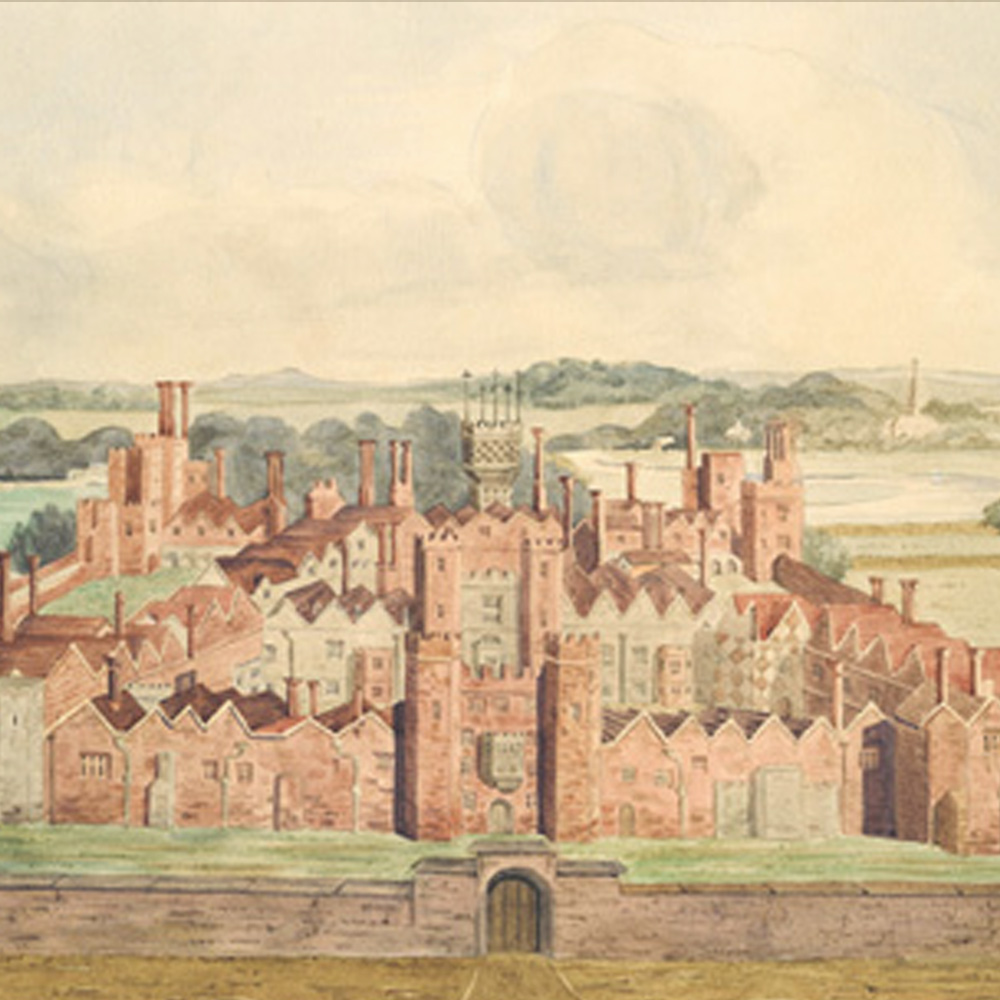
Historical image of the Oatlands Park Hotel in Weybridge, Surrey

History

OATLANDS PARK TIMELINE
1538 King Henry VIII acquires land and builds Oatlands Palace for his future Queen, Anne of Cleves, using materials from the dissolved Abbey at Chertsey.
1540 Henry and Anne marry but the marriage is later declared null and void. Henry marries Anne’s Lady-in-Waiting, Catherine Howard, in the chapel at Oatlands
1548 On Henry’s death, Edward VI, Queen Mary and Elizabeth I all succeed him as residents of the Palace. It is a particular favourite with “the Virgin Queen” who uses it as a hunting lodge.
1615 Anne of Denmark, wife of James I, commissions architect Inigo Jones to design the Queen’s House at Greenwich, and a great gateway at Oatlands. The latter survives for 150 years before being broken up and used as rockery stone.
1630 King Charles I hires John Tradescant the Elder as ‘Keeper of His Majesty’s Gardens, Vines and Silkworms’ on the Estate, at a salary of £100 per annum.
1638 John Tradescant the Elder dies and his son, John Tradescant the Younger succeeds him in the role at Oatlands.
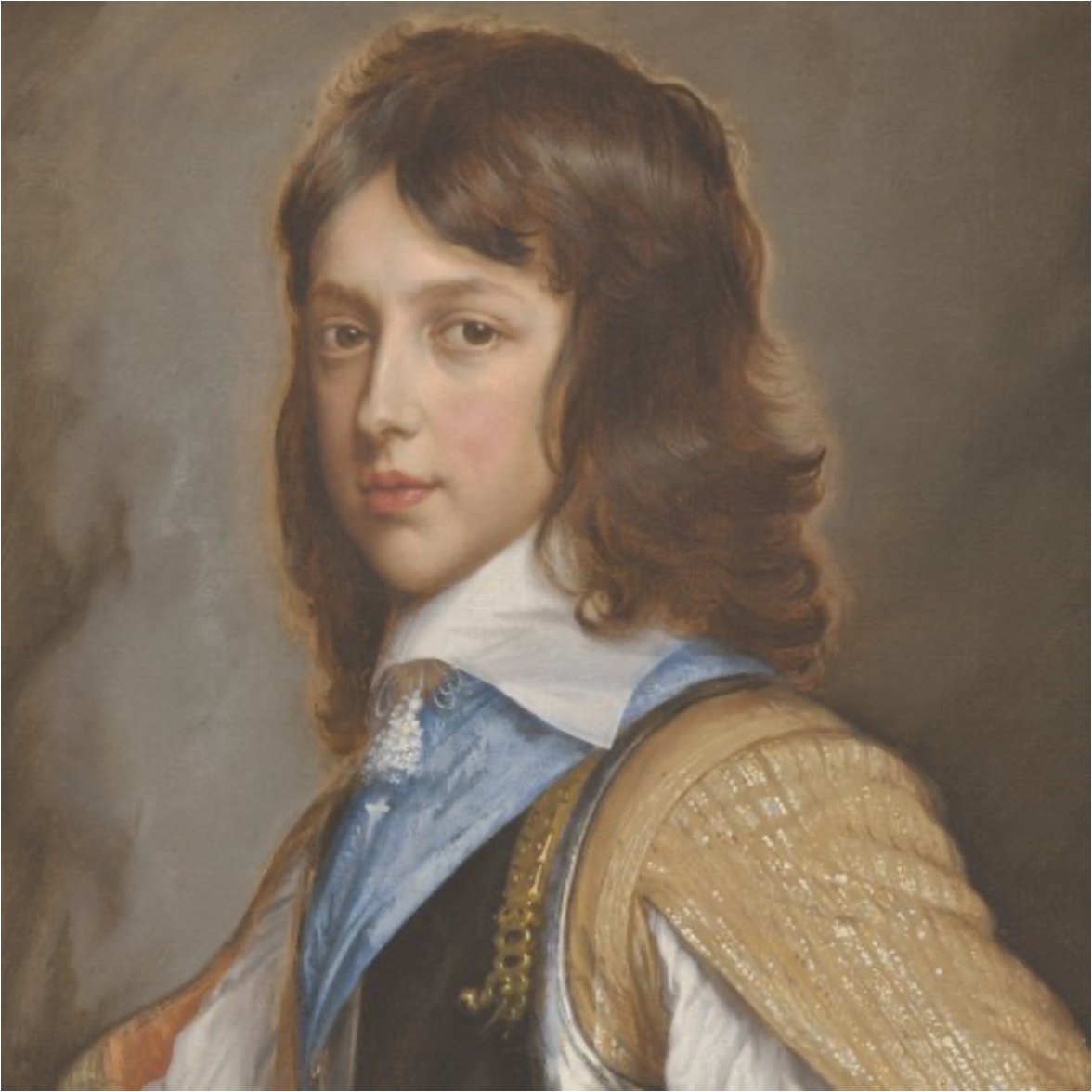
1640 Charles I's third son Henry is born at Oatlands.
1643 The Estate becomes Prince Rupert’s temporary headquarters during the Royalist march on London.
1647 King Charles I is imprisoned at Oatlands until his execution.
1648 The Palace is demolished, leaving one solitary hunting lodge on the Estate.
1649 The Estate is sold to Robert Turbridge of St. Martin-in-the- Fields for the sum of £4, 023 18s.
1650 The remaining traces of the Palace are destroyed during Oliver Cromwell’s protectorate.
1652 A Parliamentary Survey confirms a house still exists on the Estate.
1689 Sir Edward Herbert, the Lord Chief Justice is in residence but he follows James II into exile and the Estate is forfeited to the Crown. His brother Arthur, Earl of Torrington is granted the property.
1716 The Earl dies, bequeathing the Estate to a friend, the 7th Earl of Lincoln, who lays out the high lawned terrace as you see it today. The Earl’s heir Henry, Duke of Newcastle, rebuilds and enlarges the house. His coat of arms is still to be seen on the main gates. He constructs the famous Shell Grotto.
1790 Oatlands is leased from the Crown to the son of George III, Prince Frederick, thought to be “The Grand Old Duke of York” in the nursery rhyme.
1791 Composer Joseph Haydn visits. He writes “The little castle, 18 miles from London, lies on a slope and commands the most glorious view.”
1794 The house burns to the ground and is rebuilt in the Gothic style.
1804 An Act of Parliament enables the Duke to acquire the entire Freehold of the property, which has been on lease from the Crown until now.
1815 The Emperor of Russia and the King of Prussia celebrate the victory at Waterloo at a banquet held in the house.
1820 The Duchess of York dies and the heartbroken Duke puts the property up for sale.
1824 Society dandy and gambler Edward Hughes Ball Hughes, who is popularly known as “The Golden Ball” buys the Estate, although the sale is only concluded on the Duke of York’s death in 1827. Hughes honeymoons here with his wife, the famous Spanish danseuse Mademoiselle Mercandoti.
1829 The estate is put up for auction to cover debts, but some lots fail to sell.
1832 Lord Francis Egerton leases the house.
1838 The arrival of the London & South Western Railway turns the area into a “commuter belt” and the Estate becomes much sought after, for development.
1846 The Estate is broken up and sold in three lots, at auction. The house and some land is purchased by a syndicate which includes Mr James Watts Peppercorne, who later becomes the first manager of the hotel.
1856 The house is remodelled, and the Tudor Wing added, and opens as the South Western Hotel.
1860 Artist Edward Lear comes to stay as he needs some cedar trees to reference for his painting “The Cedars of Lebanon”.
1916 The hotel is used to house New Zealand troops who have been injured in the fighting in France during WWI.
1924 The founders of North Hotels purchase and enlarge the estate by including neighbouring mansion Oatlands Lodge (now demolished). The current Lily Pond now graces the site.
1927 The restaurant and upper suites are added to the Hotel.
1930 The ballroom is added.
1948 The Shell Grotto is demolished as it is deemed dangerous.
1980's Barclay Associate Hotels are in ownership of the Hotel.
1986 Oatlands Investments Ltd acquire the building, restoring it to the high standard you see today.
2011 Many pictures and artifacts which celebrate the history of the Oatlands Estate and Hotel can be found throughout the building and grounds.

The magnificent Oatlands Park Hotel you enjoy today, was built at the turn of the 18th Century on the Oatlands Estate, which has a long and varied history.

Originally the site of a grand Royal Tudor Palace, the Oatlands Estate in Surrey has been home to the Kings and Queens of England, played host to Emperors and Earls, and been immortalised in both prose and paint, throughout the centuries.

The current Hotel was built on the footprint of a large mansion which burned down in the late 1700s, but had dated back to the 15th Century. A Parliamentary Survey of the period mentions a house which sat in the grounds of a great royal palace, on the Oatlands Estate.

Henry VIII erected the palace for his new Queen, Anne of Cleves. Although a worthy rival to his other riverside house at Hampton Court, the imposing red brick building with its gateways, octagonal towers and open courts, Oatlands was only visited occasionally by the King.

And the intended resident, Anne, probably never lived there during the short time she was his wife, but it is thought Henry secretly married his next Queen, Anne’s young Lady-in-Waiting, Catherine Howard, in the Palace chapel.

The palace was more popular with his daughter, Queen Elizabeth I, who spent a lot of time and money making the building more comfortable for her court to use as a hunting lodge.

Her successor, James I and his Queen, Anne of Denmark, also favoured the palace at Oatlands and they too spent money reconstructing the building. They founded ‘The Kings Silk Works” where silk worms were bred to provide silk for weaving.

During his residency at the palace, James’ son King Charles I appointed a man called John Tradescant the Elder as ‘Keeper of His Majesty’s Gardens, Vines and Silkworms’ at a salary of £100 per annum. In this role, he bought rare plants from around the globe, and was responsible for England’s first museum ‘Tradescants Ark’. His son succeeded him in the role, on his death

Charles’ son Henry, 1st Duke of Gloucester was born at Oatlands and the ancient Cedar tree which stands beside the main drive of the Hotel today, was one of the first to be imported to this country from the Lebanon, and is said to have been planted to honour Henry’s birth.

The palace fell out of favour and was demolished in the mid 1600s during Oliver Cromwell’s short-lived reign. The materials from it were used to build the locks and bridges of the Wey Navigation Canal, which runs from Guildford to Weybridge and was the first canal in England.

However, the house on the estate escaped demolition, as it was more cost effective to let it out, than to tear it down and sell of the materials.

Over the next 150 years, the house and grounds were remodelled, by a string of wealthy tenants. You can still see the coat of arms of one, the Duke of Newcastle, on the main gates at the entrance to the Hotel.

Another, the Duchess of York, loved animals so much that she created a Dogs Cemetery for her beloved pets when they passed away. The headstones celebrating the virtues of her four-legged friends are now set in the Hotel lawn near the Lounge Bar patio.

A kind and generous woman, the Duchess was very popular with the local population and on her death, a monument was erected in her memory at the bottom of Monument Hill in Weybridge, outside The Ship Inn.

Sadly the house burnt down in 1794, and was rebuilt the Gothic style, by her husband the Duke, who went on to acquire the Estate Freehold.

On his death in 1827, the property was sold to a young Regency dandy and gambler called Edward Hughes Ball Hughes, who was popularly known as ‘The Golden Ball’. He spent his honeymoon at Oatlands, before pulling down large parts of the existing building and making many alterations to what was left.

Henry VIII Anne of Cleves Queen Elizabeth I Oatlands Palace

The 29 year old Hughes Ball Hughes continued with his whimsical alterations until his finances, considerably dented by his extravagance, forced him to let the house to the politician and poet Francis Egerton, 1st Earl of Ellesmere.

Lord Egerton lived there until the 1850s, when the arrival of the London & South Western Railway, meant the land was in high demand for the development of commuter homes.

So the absentee impoverished owner Edward, who was by then living in Paris to escape his creditors, ordered the sale of what remained of his once extensive property. The proceeds from the sale allowed him to live the rest of his life in a financially stable position.

Oatlands was covered in lots, and a small syndicate including Mr James Watts Peppercorne, bought the mansion and some of the adjoining land for the purpose of converting it into a Hotel. The house was again remodelled and the present Tudor Wing added.

In 1856, the South Western Hotel opened, with Mr. Peppercorne as its first Manager. For many years prior to the Great War, the South Western Hotel Company continued to own and run the property.

Famous guests who stayed at the South Western (later Oatlands Park) Hotel included popular actress Fanny Kemble, writer Emile Zola, politician Charles Dilke, novelist Anthony Trollope and the cartoonist and artist Edward Lear.

In her biography of Lear called ‘The Life of a Wanderer’, authoress Vivien Noakes wrote "He needed some cedar trees that were within easy reach of London, and he found them at the Oatlands Park Hotel at Walton-on-Thames."

Whilst he was working on his nine foot long picture of the ‘Cedars of the Lebanon’, he penned letters to his friends including Emily Tennyson, Sir George Grove and Chichester Fortescue, to whom he wrote in 1860 saying "The Hotel then is a large and sumptuously commodious place... I have a large light bedroom and wanting for naught."

In 1916 it was requisitioned and during the War was used as a Casualty Hospital for the New Zealand Forces serving in France. New Zealand Avenue, at the end of Oatlands Drive, is named in memory of the New Zealanders who died here.

Shortly after the War the property was purchased by Mr. M.F. North and Mr. R.W. Black, the founders of the North Hotels, and in 1924 the Estate was considerably enlarged by the purchase of Oatlands Lodge, a large mansion, now demolished, which stood on the site of the present Lily Pond.

As the years have passed, the Hotel has been enlarged further, notably by the extension of the Restaurant with suites above, in 1927, and by the addition of the Ballroom wing in 1930.

Barclays Associate Hotels owned the hotel for some years until the mid 1980's.

Oatlands Investments Ltd acquired the hotel in 1986, restoring and refurbishing it to a standard, which takes the Oatlands Park Hotel into 2011 and beyond.

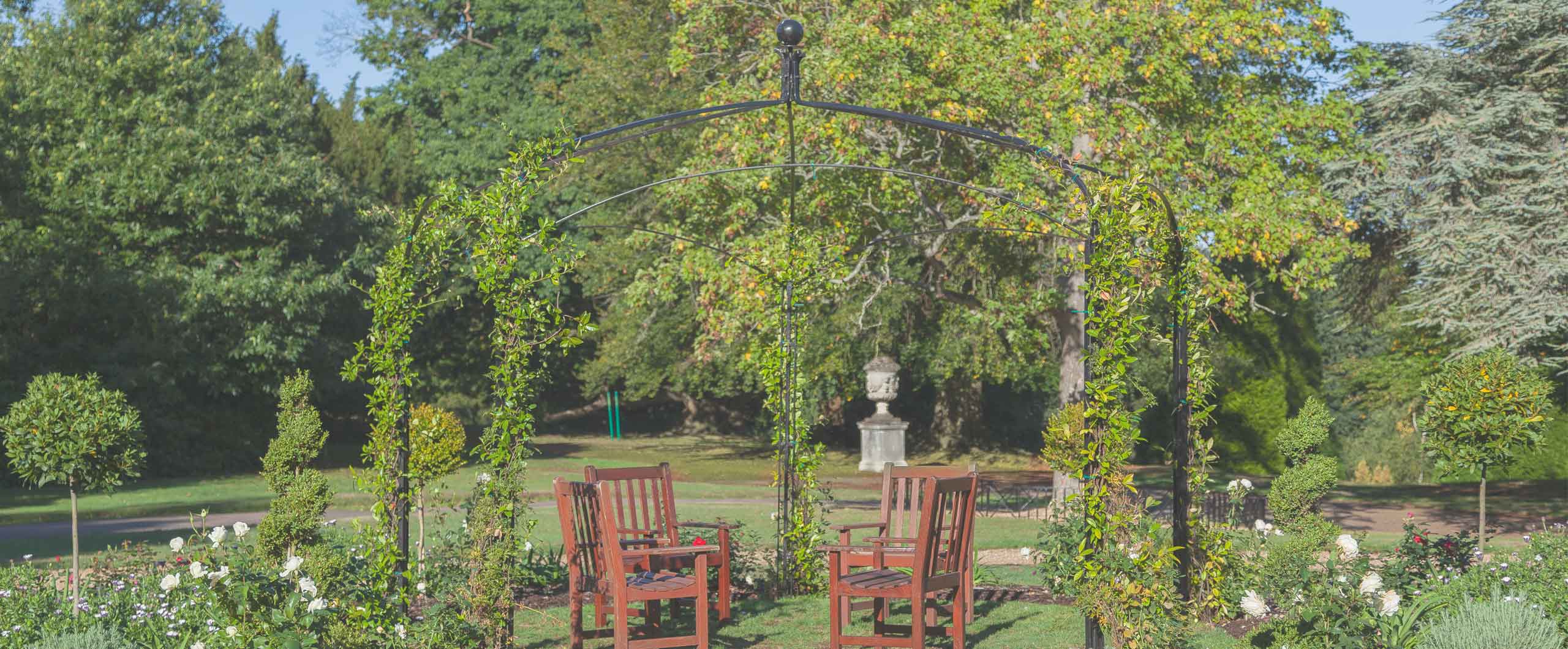
Retained is the character of the Listed Building and grounds, which are included in the Register of Gardens and Parks of Special Historic Interest.

Edward Hughes Ball Hughes Oatlands Park Cedars of Lebanon The grounds in 1776 Actress Fanny Kemble

Website by perfectpage

Oatlands Drive, Weybridge. Surrey, KT13 9HB.